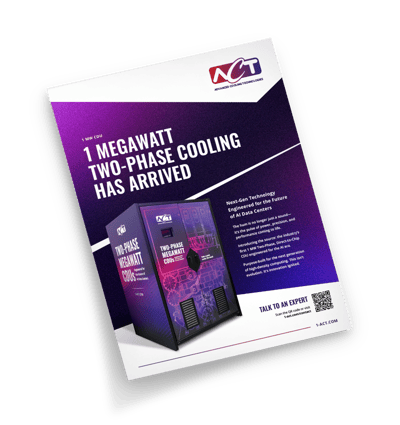
1 MW Two-Phase Direct-to-Chip CDU
Megawatt-Scale Two-Phase Cooling. Beyond the Benchtop.
As AI and HPC push thermal demands higher, liquid cooling must do more than handle increasing heat loads. It must respond to changing conditions, maintain system stability and perform at scale.
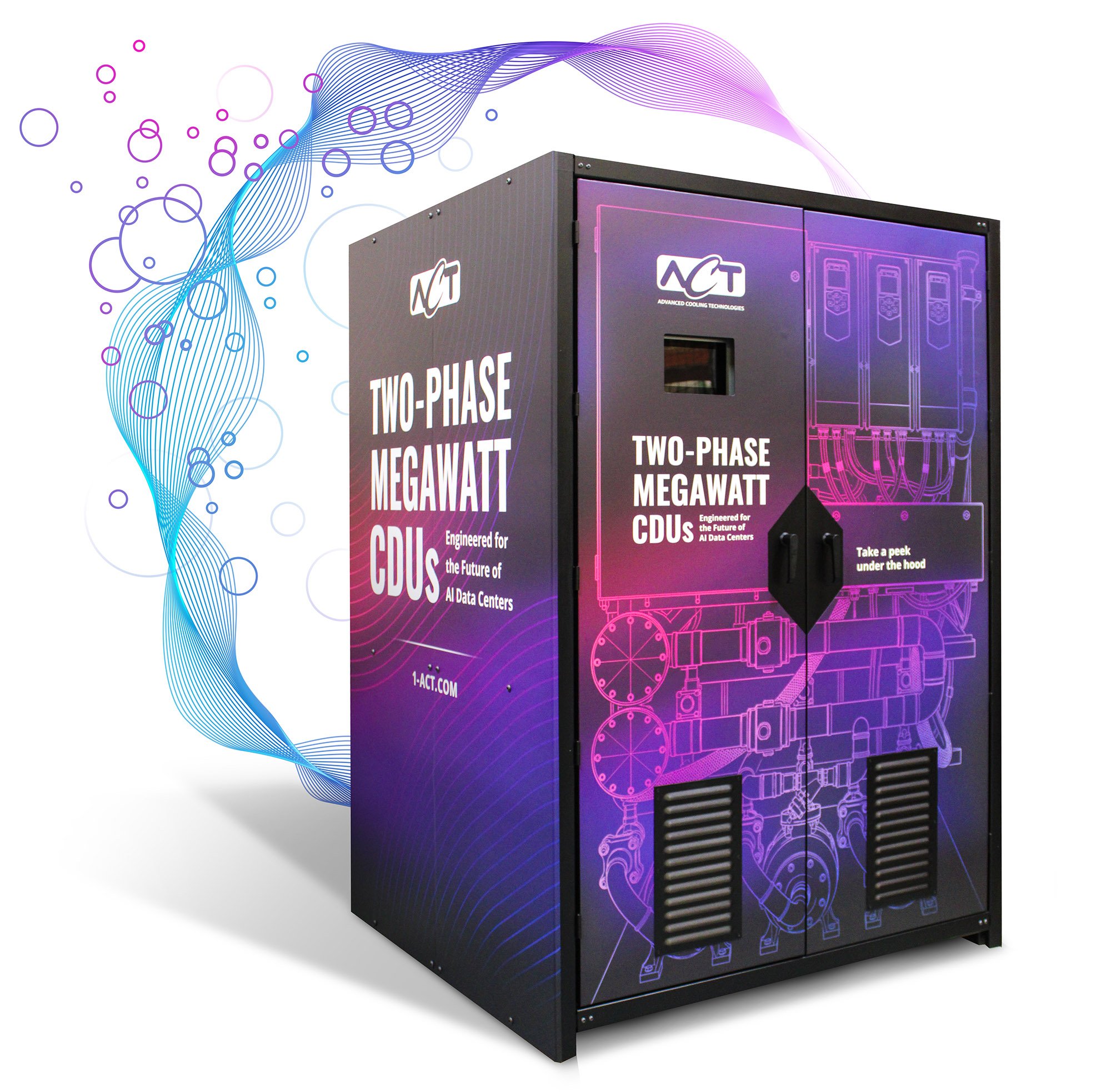
ACT's 1 MW Two-Phase CDU has now been tested and validated at megawatt scale, demonstrating the capacity and system response needed to advance two-phase direct-to-chip cooling toward real-world data center applications.
See it for yourself at SC26. Visit ACT at Booth 853, November 17–19 in Chicago, to get an up-close look at the CDU and talk with our engineering team about your cooling challenges.

THE PROOF
Tested at Megawatt Scale. Under Changing Loads.
ACT put its 1 MW Two-Phase CDU to the test, evaluating capacity, stability, energy efficiency and control response across changing thermal loads and operating conditions. The results demonstrate how an integrated two-phase cooling system performs at megawatt scale, marking an important step toward real-world data center deployment.
1 MW +
Demonstrated Cooling Capacity
200–1,200 kW
Dynamic Load Range
Within 5°C
Chilled-Water Temperature Appoarch
WATCH
Behind the 1 MW Validation
What does it take to test a two-phase cooling system at megawatt scale?
See the equipment, testing environment and engineering work behind ACT's completed validation.
THE ENGINEERING
Designed for the Demands Beyond 1 MW
Capacity is only part of the equation. A cooling system must also accommodate changing workloads, integrate with facility infrastructure and support the practical requirements of operation and maintenance.
ACT's 1 MW two-phase CDU brings together fluid management, integrated controls, N+1 pump redundancy and serviceability in a system engineered for high-density computing.


How It Works
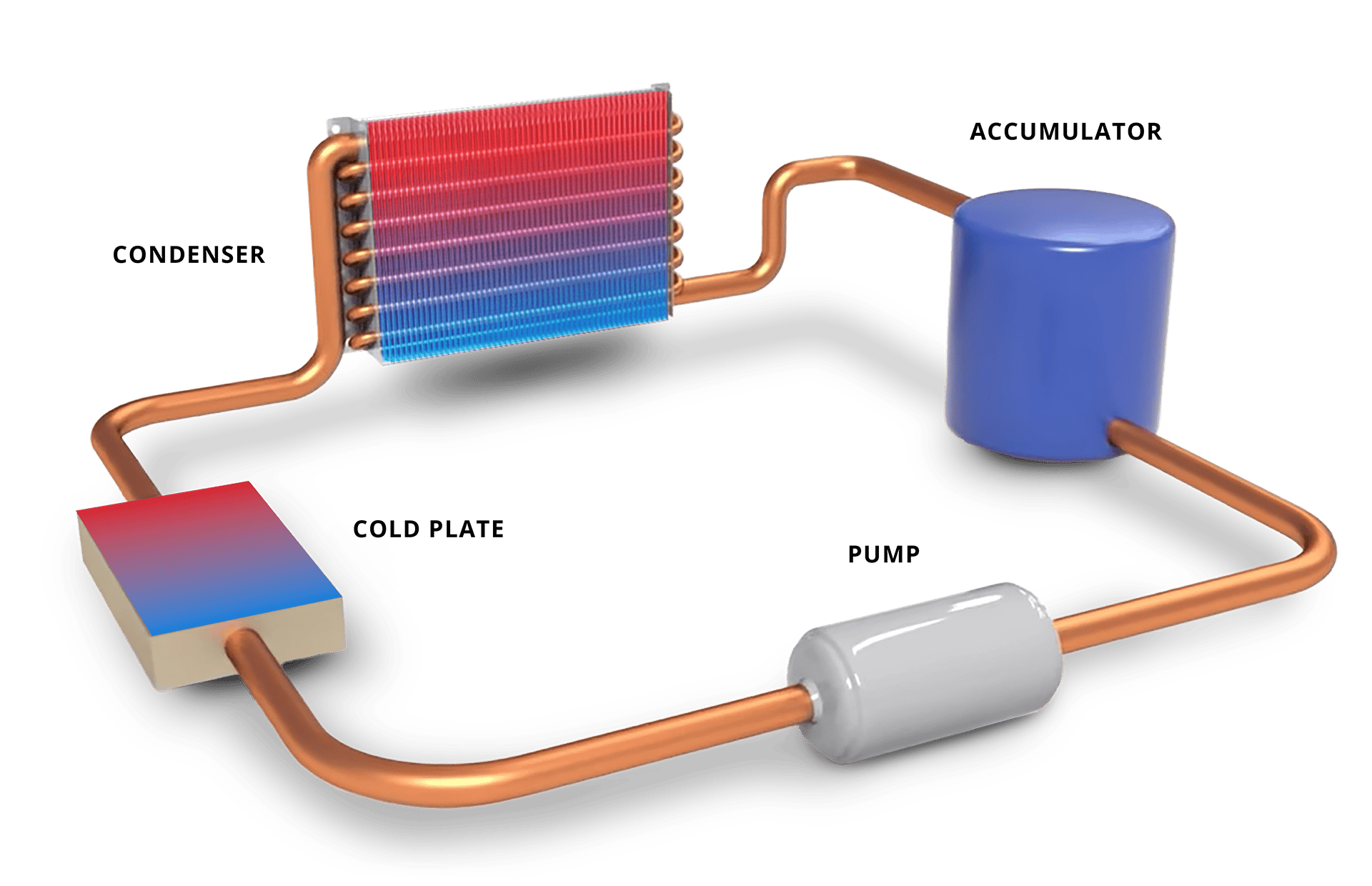
Inside the 1 MW Two-Phase Cooling Cycle
As chip power and heat flux increase, efficiently moving heat away from processors becomes increasingly challenging.
ACT's two-phase direct-to-chip cooling system takes advantage of the refrigerant's phase change to absorb heat directly at the cold plate.
As the refrigerant absorbs heat, a portion of the liquid vaporizes. The vapor-liquid mixture returns to the CDU, where heat is transferred to the facility cooling system. The refrigerant is then recirculated to the cold plates, completing the cycle.
By using phase change rather than relying solely on increases in coolant temperature, two-phase cooling offers a path to managing higher thermal loads with significantly lower coolant flow requirements.
Meet the Power Behind the Future of Cooling
Schedule a private walkthrough of our 1 MW demo
We’re bringing next-generation Two-Phase cooling to SC26 — with our 1 MW CDU live on the show floor. See the future of high-density data center cooling in action and talk directly with ACT’s engineering team about real-world performance, integration and deployment.

Bring the challenge. Meet the team.
Devin Pellicone
Director, Data Center Solutions

Bryan Muzyka
Senior VP, Sales & Marketing

Matt Keller
Principal Engineer

Luke Herwig
Senior Engineer


Not heading to SC26?

Not a problem.
Albert Pinto
Senior Business Development Manager, Data Center Solutions
Not heading to SC26?

Not a problem.
Albert Pinto
Senior Business Development Manager, Data Center Solutions